Renegade Engineering
Topics worth your time: how Chargerless builds ultra-low-power wearables that don’t need to be charged, a counterpoint to the idea that hardware takes big teams and bigger budgets, putting datacenter land use in context, and more.
P.S. Limited spots are left at our SF Tech Week event on 10/09 - apply to attend!

Interesting Video: Renegade Hardware Founders
A typical operating philosophy in engineering programs, whether at a large enterprise or a venture-backed startup with ample capital, is to hire more people as the default response to a problem. This is traditionally true in consumer hardware where a rule of thumb may be a minimum of 70–75 people across mechanical, electrical, firmware, supply chain, and more to get a first product out the door (think Nest or the infamous Humane Ai Pin, though this also depends on BOM count and product complexity). The same philosophy is at play as more companies scale factories (see Hadrian’s $1.37B Series D), with the commitment extending beyond hiring to equipment and production capacity. Large ambitions come with larger budgets, and an appetite to try anything and everything.
Leon’s recent conversation with Andy Kong of Chargerless shows the other end of the spectrum — one that feels more like a thought exercise in going 0 → 1 and finding out how far you can push small teams, or even a single founder. For context, Chargerless is a health-tracking wearable that averages ~7 µW on a sub-10 mAh battery, in a new class of ultra-low power wearable trackers. Same core functionality as devices like WHOOP and Oura, minus the charger.
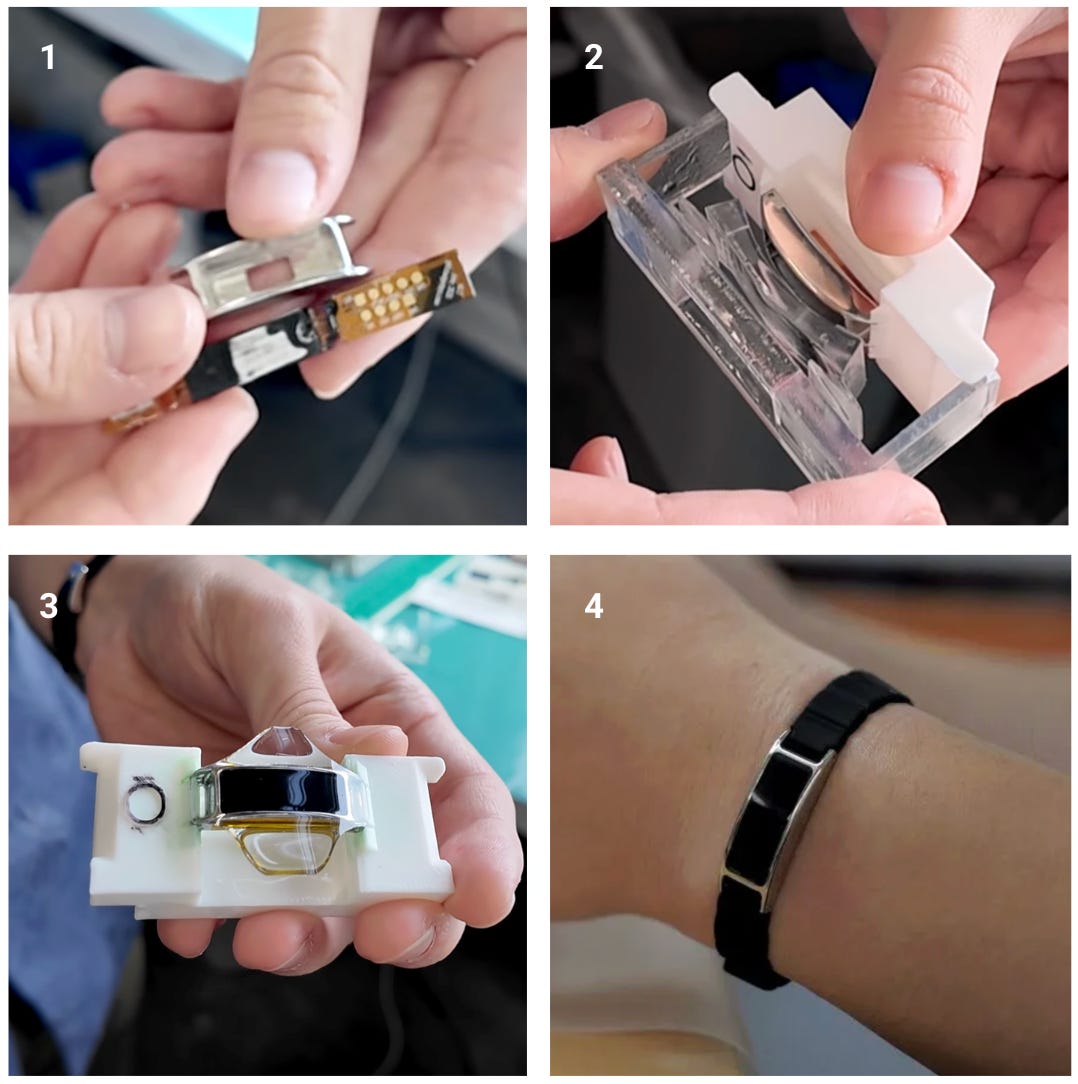
Some of what stood out from the full conversation:
Product architecture. The wearable consists of a flex PCB, folded three times, with a monocrystalline silicon solar panel on one side and a sub-10 mAh battery on the other. Boards arrive pre-populated with everything but those two components, since the battery can’t be reflowed and the panel is too delicate; both are attached by hand. It’s then potted for waterproofing, set in a machined case, and cast in clear optical epoxy.
Supplier relationships are a moat. Part of why the Oura Ring 5 is twice as thin as its predecessor comes down to a battery manufacturer exclusively licensing Oura a new generation of flat ring batteries, leverage that comes only from order volumes large enough to shape a supplier’s roadmap. As he puts it, to work in an industry is to know all the players in it and to know all the developments in the upcoming future of it.
LLMs are good at bring-up, bad at debugging. One way to bypass that is to close the loop with a DUT on the bench. His setup uses a Jira-style board where new firmware/app features are dispatched to its agents, then tested directly against a DUT and phone connected to the machine. New firmware or app changes are tested in vitro before anything reaches a shipped device.
Lots more interesting details in the full video on solar architectures, sensor sampling rates, how devices use far less power than they did even 5-10 years ago, and what the future of wearables might look like.
More From Around the Web
Andy’s original research paper on wearables powered by intra-body RF energy.
A decision tree for the types of comments you’ll find on Hacker News.
Some classic Physics 101: thermal expansion in action.
Dan Luu on why turning your brain off won’t work, even as models get better.
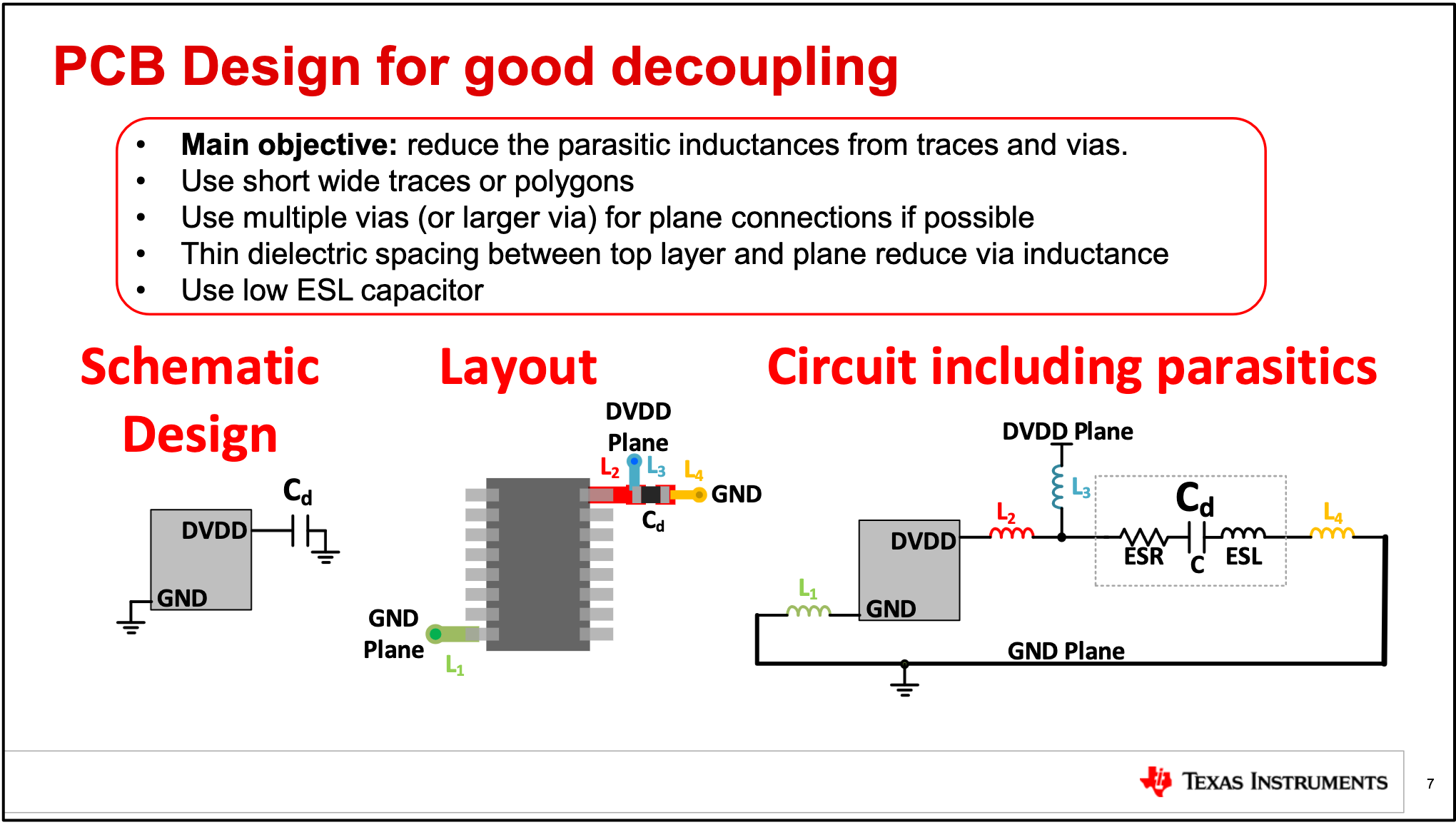
Notes from Texas Instruments explaining decoupling capacitors. Think of decoupling capacitors as energy reservoirs that can supply bursts of current to keep a chip’s power supply stable.
For anyone considering a startup move: a curated list of companies across engineering software, manufacturing, robotics, and more.
More events on our radar:
Is there really an electrical engineer shortage? Join a live conversation on the nuances of the current job market.
Revel is hosting a hard tech happy hour in SF on 10/8. Hear from Scott Morton (Revel CEO/Founder) and Miles Grimshaw (Partner, Thrive Capital) on building software for physical systems and opportunities in the space. RSVP here!
Presented by Standard Propaganda: Selling Engineering Tools to Enterprises
Product-led growth sells to the user, who can’t buy anything. Founder-led sales builds on your credibility, and to a legacy enterprise, your startup has none. That’s how engineers can love your demo while the deals that would prove product-market fit to your investors never close. This walkthrough breaks down who actually signs, what they’re afraid of, and what you need to put in front of them.
The full playbook is open to readers of the newsletter—no signup required. Watch here.

Interesting Chart: Data Center Land Use
A contrarian perspective from Per Aspera on the data center buildout.

Manufacturing & Startup News
MacroCycle signed a carbon-credit deal with Meta to help finance its first U.S. plastics recycling plant.
Meta unveiled Muse Charm, a Tamagotchi-like device for talking to its Muse AI agent (a personal assistant you can speak with), with shipments planned for December.
Crusoe canceled its $1.25B order for Boom Supersonic turbines, which would have supplied 29 natural-gas turbines to power AI datacenters.
Hubble Network raised a $200M Series C at a $1.6B valuation to expand from six satellites to 60 by 2029, allowing Bluetooth devices to report their location from anywhere.
Prime Minute emerged from stealth with $15M in pre-seed funding to develop systems that fight wildfires from the air, with prototype evaluations planned in Colorado later this year.
Tools From Our Partners
Aris Machina Protos – Design & validate anything, with the AI-native workspace for industrial science and hardware R&D.
SolidWorks for Startups – Full access to SolidWorks’ product development tools, free for early-stage startups.
Zoo – AI-native CAD with a modern geometry engine, readable code, and editable feature trees for precise, editable models.
Access Every Link We’ve Ever Shared 🎞️
Refer three friends to Hardware FYI and unlock our full archive.
Missed an issue? Hunting for that one link? Every tool, guide, and article we’ve ever shared is in here.
P.S. If you find something interesting—an article, tool, funding round, project, really anything—send it our way!
P.P.S. 20,000+ engineers, founders, and operators read this newsletter. If you want to reach them, get in touch.