Old Tricks for New Robots
Topics worth your time: the generalization problem in humanoid robotics, Augmental’s approach to silent speech, a field guide to quantum computing, the fundamentals of mechanical engineering mixed with a bit of common sense, and the Japanese terminology behind lean manufacturing.
P.S. We’re hard at work on our SF Tech Week event on 10/09 - register here!

Interesting Links
A deep dive from Kai Williams on the practical limitations of humanoid robots and why the ability to generalize tasks remains elusive despite increasingly impressive demonstrations. Progress in general-purpose robotics appears to be accelerating rapidly, especially when demonstrations of backflipping Unitree G1s are paired with new 100-meter sprint records. And while the industry is developing quickly, progress is not as linear as it appears; easy-to-absorb benchmarks obscure the critical obstacles to widespread adoption. A key challenge on the software side is making robots truly general-purpose, capable of adapting and learning new skills from a handful of examples. Physical Intelligence’s robot learned to turn a sock inside out for the Humanoid Olympics in early 2026, but that task alone took 176 demonstrations, or ~8 hours of training data. That’s part of what makes recent model announcements with Generalist’s GEN-1.5 and Skild’s S1 so interesting: both report new task success from a single demonstration without task-specific training. Generalist reports 59% average success on 10 tasks with a 30-second context window; Skild demonstrates tasks lasting up to 10 minutes. On the hardware side, the challenges are more familiar: reliability (joint cycling leads to disconnected cables) and uptime (Unitree G1s reportedly need 10 minutes of cooling after 5-15 minutes of work).
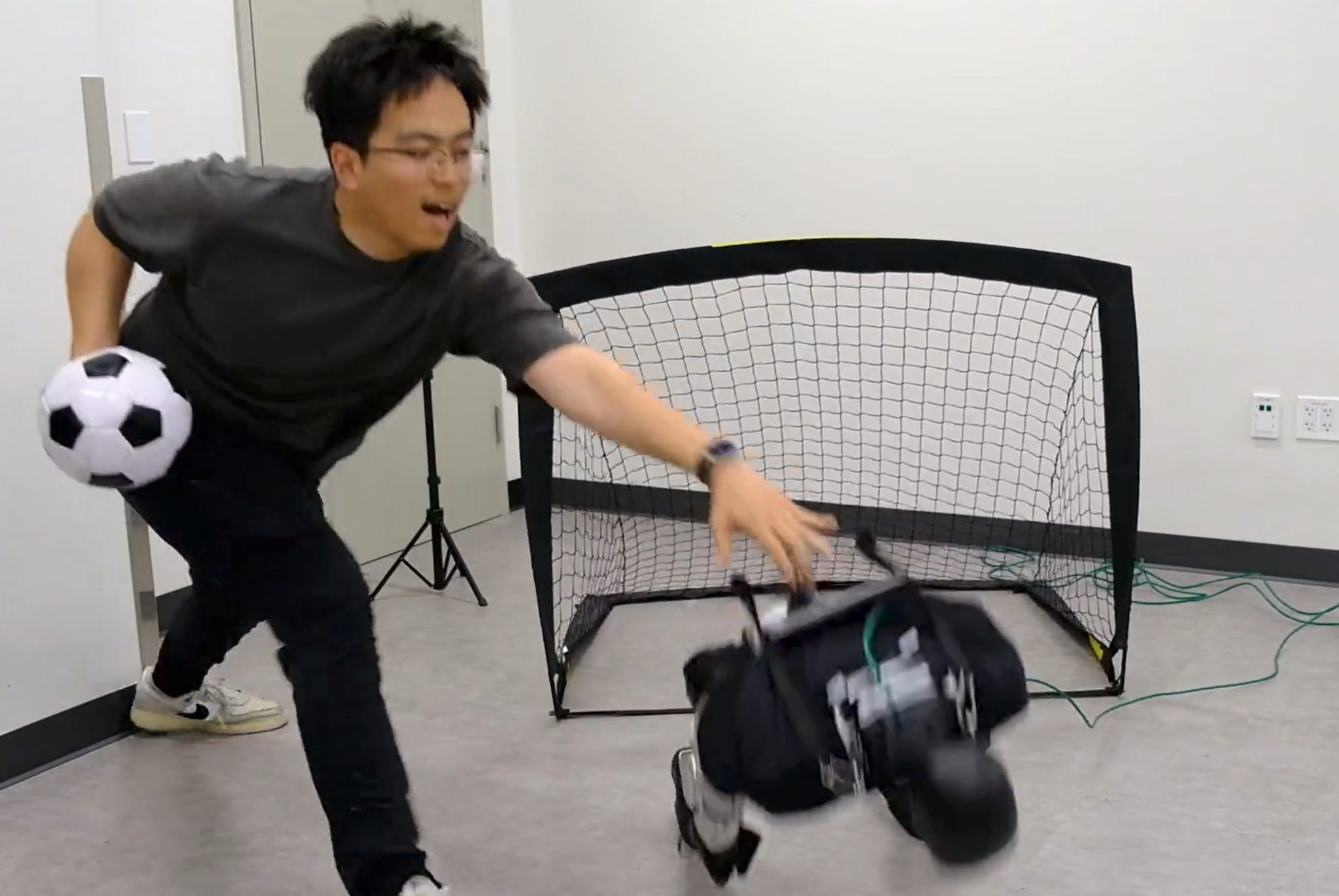
Following in the lineage of silent speech devices, Vox is Augmental’s take on a quiet speech device that acts as a discreet, personal transcription microphone. Unlike the myriad of other form factors (pins, pucks, rings, etc.), the device rests against the chest and uses a stethoscope-like acoustic horn to amplify sound from the user’s body. Using this approach, the team has essentially created an auditory short circuit, allowing the device to capture whispered speech even in loud environments (which they demo here). An earlier version of this approach dates back to a 2003 paper Non-Audible Murmur Recognition, which explored using a stethoscope-like microphone to capture speech vibrations through the skin. More recently, Wispr Flow originally explored a wearable silent speech interface using skin-contact electrodes (see US 20240221741A1), before pivoting to focus exclusively on voice dictation software.
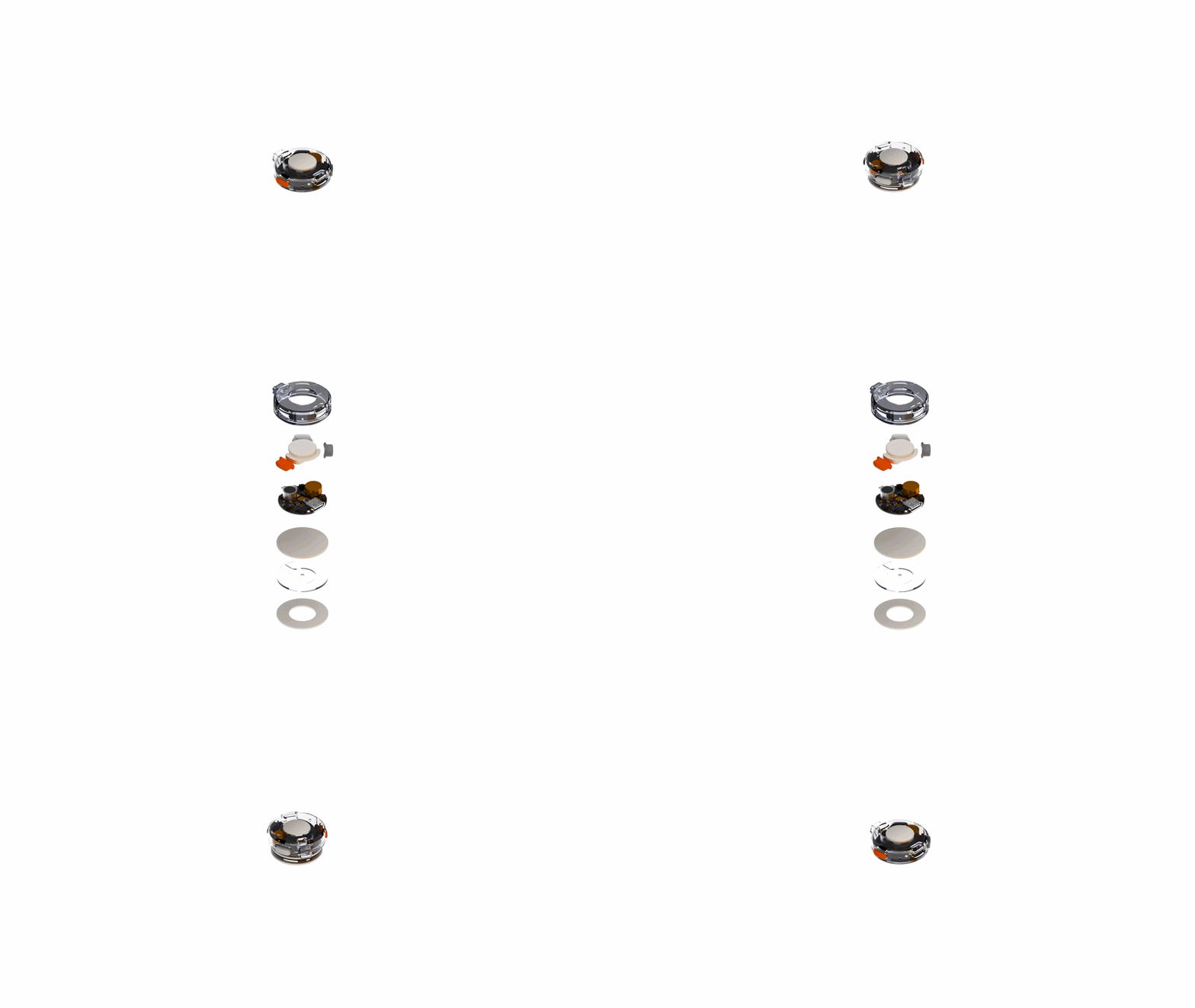
Quantum Computing for the Confused is a reader-submitted guide to quantum computing, with a welcome focus on making a field dense with specialized research legible to a general audience. The author, an electrical engineer outside the quantum industry, wrote it after struggling to find accessible sources that connected the theory, hardware, and potential applications. The result of his research is a free, ~40,000-word book that covers those topics and the field’s current state, without assuming any prior background. State of Play (Chapter 5, pg. 103) is worth a read on its own for an honest assessment of the industry’s commercial prospects. The book is also available in PDF and EPUB formats.
“If you can’t explain something to a first-year student, then you haven’t really understood.”
—Richard Feynman
In a similar vein, Basics of Mechanical Engineering: Integrating Science, Technology, and Common Sense is a great overview of the many core ideas covered in a standard 4-year mechanical engineering degree. Written by USC’s Paul D. Ronney for an introductory course, it connects topics often taught in separate classes (think forces, thermodynamics, heat transfer, etc.) with an emphasis on combining domain-specific knowledge and common sense to work through unfamiliar problems. It’s a useful resource to bookmark whether you’re approaching the subject for the first time or revisiting material previously learned in school. If it needs engineering but it doesn’t involve electrons, chemical reactions, arrangement of molecules, life forms, isn’t a structure (building/bridge/dam) and doesn’t fly, a mechanical engineer will take care of it… but if it does involve electrons, chemical reactions, arrangement of molecules, life forms, is a structure or does fly, mechanical engineers may handle it anyway.
All About Lean’s glossary of 469 lean manufacturing terms with definitions and English equivalents for the Japanese terminology. A large majority of the vocabulary stems from the Toyota Production System, so a little translation comes with the language. Genchi genbutsu means “go and see for yourself”; poka yoke means “mistake proofing.” The latter was actually derived from baka yoke (“idiot proofing”) before given a more diplomatic name.
On the history of the Toyota Production System, check out our issue from 6/09.
For those in the Bay Area, here are two initiatives worth checking out (and if you’re outside this geographic bubble, send us interesting opportunities near you - we’d love to share!):
Cerebras is giving public-access tours of its data center facility.
Matter is opening part of its Sunnyvale factory as a free, communal workspace for startups to build and prototype.

And one fun link to round out the week:
An instructional video on the operation of analog computers, used to control automatic rangefinding for large guns aboard navy vessels in the 1950s.
Sponsored: a deep dive with Xometry experts on reverse engineering mechanical components.
Sponsored: Inside Protos, Aris Machina's Workspace for R&D
When a thermal fix changes a bracket, what happens to its structural margin? Why was one alloy chosen over another? Protos is built to keep the physics, assumptions, and decision rationale connected as a design evolves.
In our latest sponsored article, we explore how Aris Machina approaches physics-based analysis, material selection, and traceability, and why capturing engineering knowledge as the work happens matters for complex aerospace programs.

Startup News
Stoke Space raised an initial $1B in Series E funding to prepare for Nova’s first launch and develop a larger version of the rocket. Both versions are designed to recover and reuse the booster and upper stage. Nova Pathfinder is scheduled to launch in early 2027, while the larger Block 2 model is targeting 2029 and would increase payload capacity to LEO from 3 to 15 metric tons. The round was co-led by Point72 Ventures and Spark Capital.
The Boring Company raised $3B in new funding to develop more than 150 km of underground infrastructure across the UAE and expand its transportation projects in Las Vegas, Nashville, and Dubai. The company builds tunnels for underground passenger transportation, with the UAE expansion building on its previously announced Dubai Loop project. The round was led by the UAE with participation from Sequoia and Andreessen Horowitz, among others.

Poseidon Aerospace raised a $60M Series A to develop uncrewed cargo aircraft for defense and regional commercial delivery. Its aircraft use conventional combustion engines paired with autonomy and remote piloting to lower operating costs. The company plans to operate its own regional air cargo business and expects Egret’s first test flight by the end of 2026. The round was led by TQ Ventures.
The Exploration Company raised a $450M Series C to develop its Nyx cargo capsule and Storm reusable rocket engine. Nyx is designed to transport cargo to space stations and return it to Earth, with its first ISS mission planned for 2028. The company has secured more than $2B in contracts, including ESA development awards and agreements to resupply planned commercial stations.
Vessev raised $19M in Series A and follow-on financing to scale production of its electric hydrofoil vessels and support U.S. manufacturing plans. Its VS–9 passenger boat uses underwater foils to lift its hull above the water (for drag reduction) and is already operating commercially in New Zealand. The funding was led by Blackbird Ventures.
Open Jobs
Describe your ideal role on our job board, and we’ll find matches. Try “designing aerospace hardware in LA.”
Early Career:
The Boring Company is looking for a Mechanical Shop Assistant in Las Vegas, NV
AMD is looking for a 2027 Undergrad Supply Chain Co-Op/Intern in Austin, TX
Mid-Level:
Tutor Intelligence is looking for a Mechanical Engineer (Robotics) in Watertown, MA
Array Labs is looking for a Printed Circuit Board Design Engineer in Redwood City, CA
Sesame is looking for a Product Manager, Hardware in San Francisco, CA ($175–280K)
Senior to Staff:
Anthropic is looking for a Manufacturing Engineer - Data Center Hardware (Remote, $320–405K)
Mattel is looking for a Sr Director, Product Design – Hot Wheels in El Segundo, CA
Tools From Our Sponsors
Design & Simulation
Duro — AI-native PLM that centralizes part data, manages change orders, and connects the whole stack so your team can focus on execution, not administration.
nTop – Computational design to accelerate product development.
Onshape for Startups – Free access to Onshape Professional or Onshape Government (compliant with ITAR/EAR) for hardware startups and entrepreneurs.
Manufacturing
Loombotic – Instant-quote custom wire harnesses. Upload drawings or design online, fast turnaround.
Xometry — Instant quoting on custom parts, from R&D prototypes to high-volume production runs.
Fictiv – On-demand custom manufacturing from prototype to production.
Access Every Link We’ve Ever Shared 🎞️
Refer three friends to Hardware FYI and unlock our full archive.
Missed an issue? Hunting for that one link? Every tool, guide, and article we’ve ever shared is in here.
P.S. If you find something interesting—an article, tool, funding round, project, really anything—send it our way.
P.P.S. 20,000+ engineers, founders, and operators read this newsletter. If you want to reach them, get in touch.