Machines that Make Smaller Machines
Topics worth your time: novel manufacturing as a creative unlock, the intersection of space launch cost and data center fervor, a master at work in the middle of an engineering challenge, rules for systems engineering, and field notes on how to build hardware abroad with the right partners.

Interesting Links
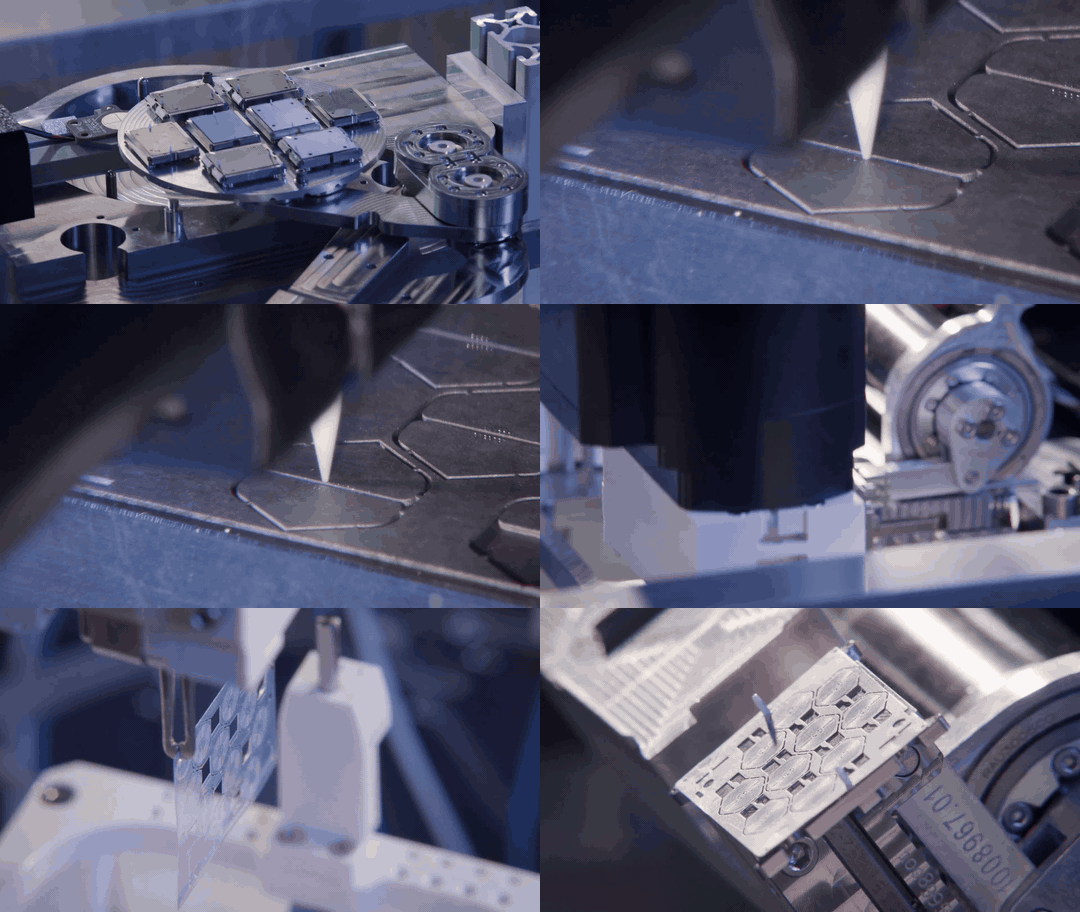
Last week, Atomic Machines came out of stealth with the Matter Compiler, a novel, general-purpose micromanufacturing technology. Much of this domain traditionally belongs to microelectromechanical systems (MEMS), which use processes adapted from chip fabs to produce mechanical features on the scale of 1 to 100 micrometers; familiar examples include accelerometer and gyroscope chips in smartphones or MEMS-based microphones. Many components and technologies are limited by manufacturing technology (not physics), and Atomic Machines is betting a sufficiently broad compiler can improve a vast number of essential components. The same real-world functionality and hype of 3D printers is tied to the same basic premise: the ability to produce many useful products without retooling. However, the technology here is quite distinct. There is limited information on the processes that their Matter Compiler is capable of combining. However, its first product, a miniature power relay that can carry 150A, gives hints. Patents (1, 2, 3) that appear related indicate laser-cut sheets of conductive and magnetic material, stacked, aligned, and bonded, plus liquid-metal contacts sealed in nitrogen. If they are able to deliver half as much as they seek to, it is likely to enable vast improvements in several classes of electrical components (not to mention a platform for scientists and industry to prototype and build within a broader open design space). Advances in manufacturing technology, tooling, and digital design make it possible to create things closer and closer to the limits of physics. Past forays into general-purpose manufacturing technologies (3D printers) ultimately did not reach the heights many dreamed of. Despite this, they fill many extremely successful niches, like dental, prototyping, and bespoke design. Another challenge to technologies like this has been scaling: it is often difficult but doable to produce small runs of highly performant components, but making a micro-manufacturing line is much more difficult. The remaining open question for Atomic Machines is: How many products have potential solutions inside their novel design space, and how do they compete with existing manufacturing technologies on cost and speed?
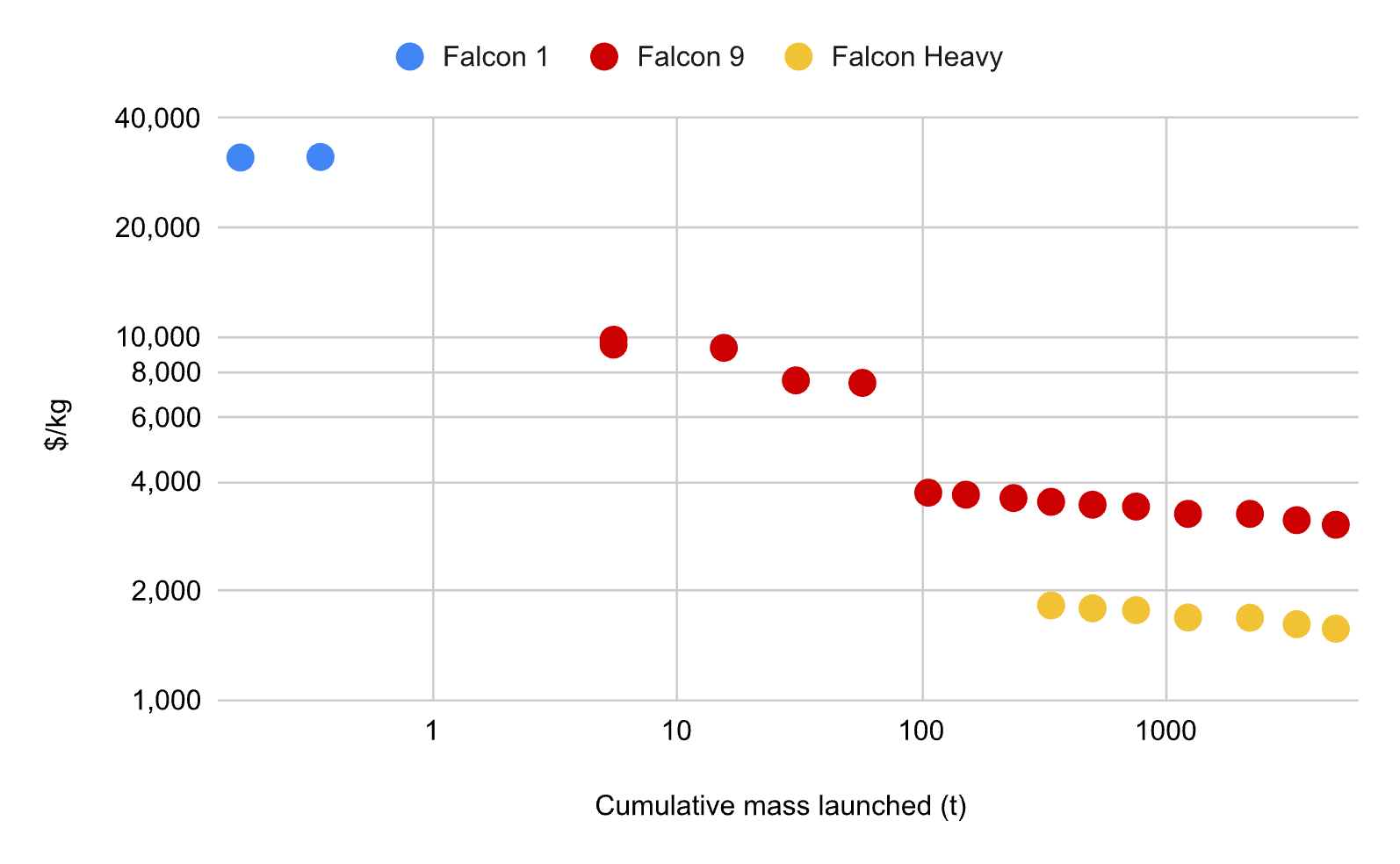
When does it officially make sense to build data centers in space? For Google, when launch costs are below $200/kg. If SpaceX continues the learning rate that it has enjoyed, this price point could arrive as soon as 2035. The interplay between the immense pressure to build data centers with public skepticism, difficult permitting, and lack of available energy means the break-even points are constantly in flux. Now all that remains is to confirm that TPUs are able to survive the forces and radiation to get up there, and to design systems that can reliably ferry heat away (recall our earlier coverage of heat pipe design). Engineers with expertise in extraterrestrial heat transfer are about to be in high demand…
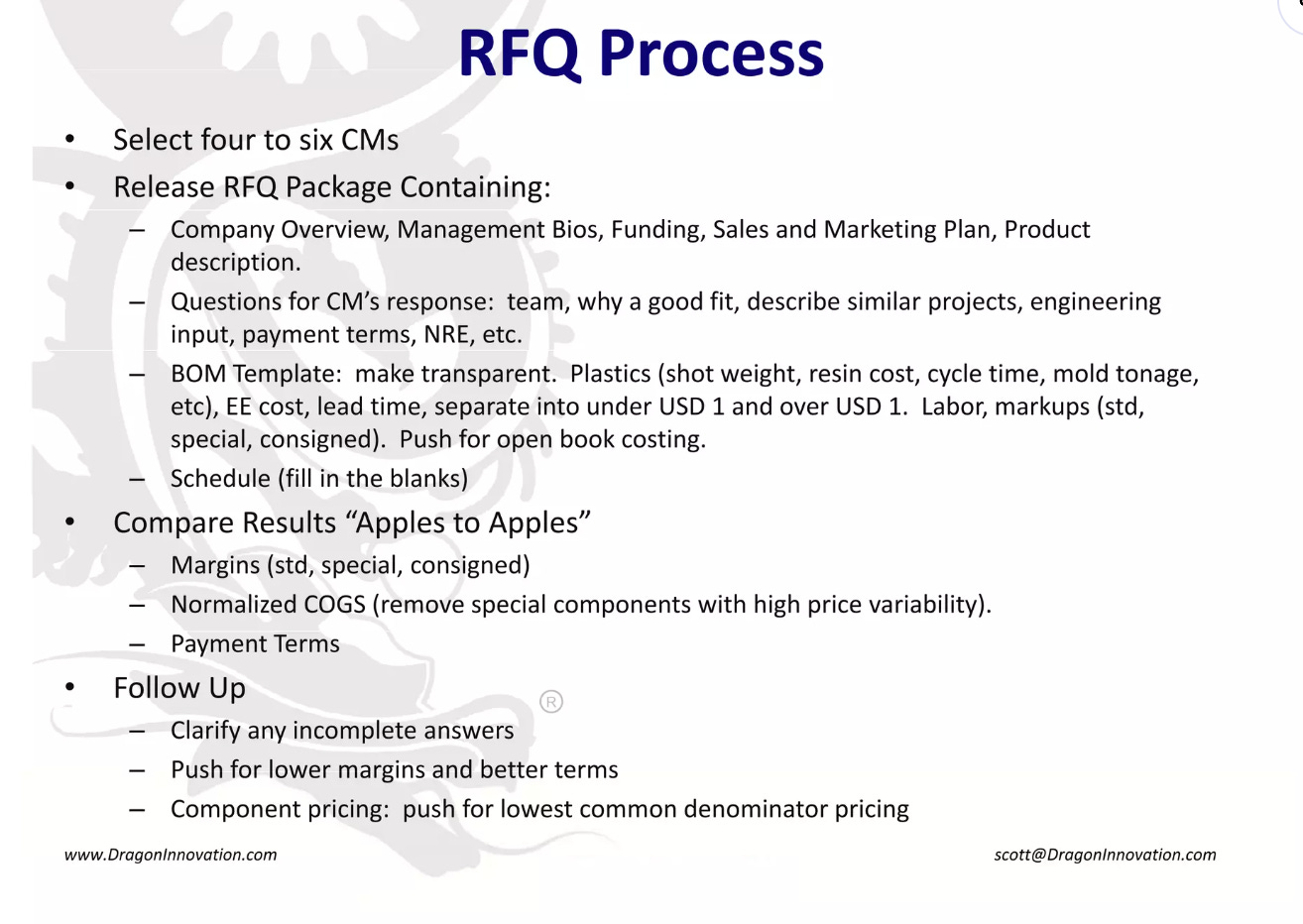
If you need to build something abroad, how do you find the right manufacturing partner? Dragon Innovation (now Avnet) outlines how to build relationships with high-quality manufacturers and protect intellectual property, while taking advantage of the rapid tooling available outside the US. While a little dated (and perhaps uncool in the Reindustrialize era), the slides discuss how to choose trustworthy manufacturers and dial in QC on products made in China. Unsurprisingly, communication and relationship building are the most important facets of building across time zones.
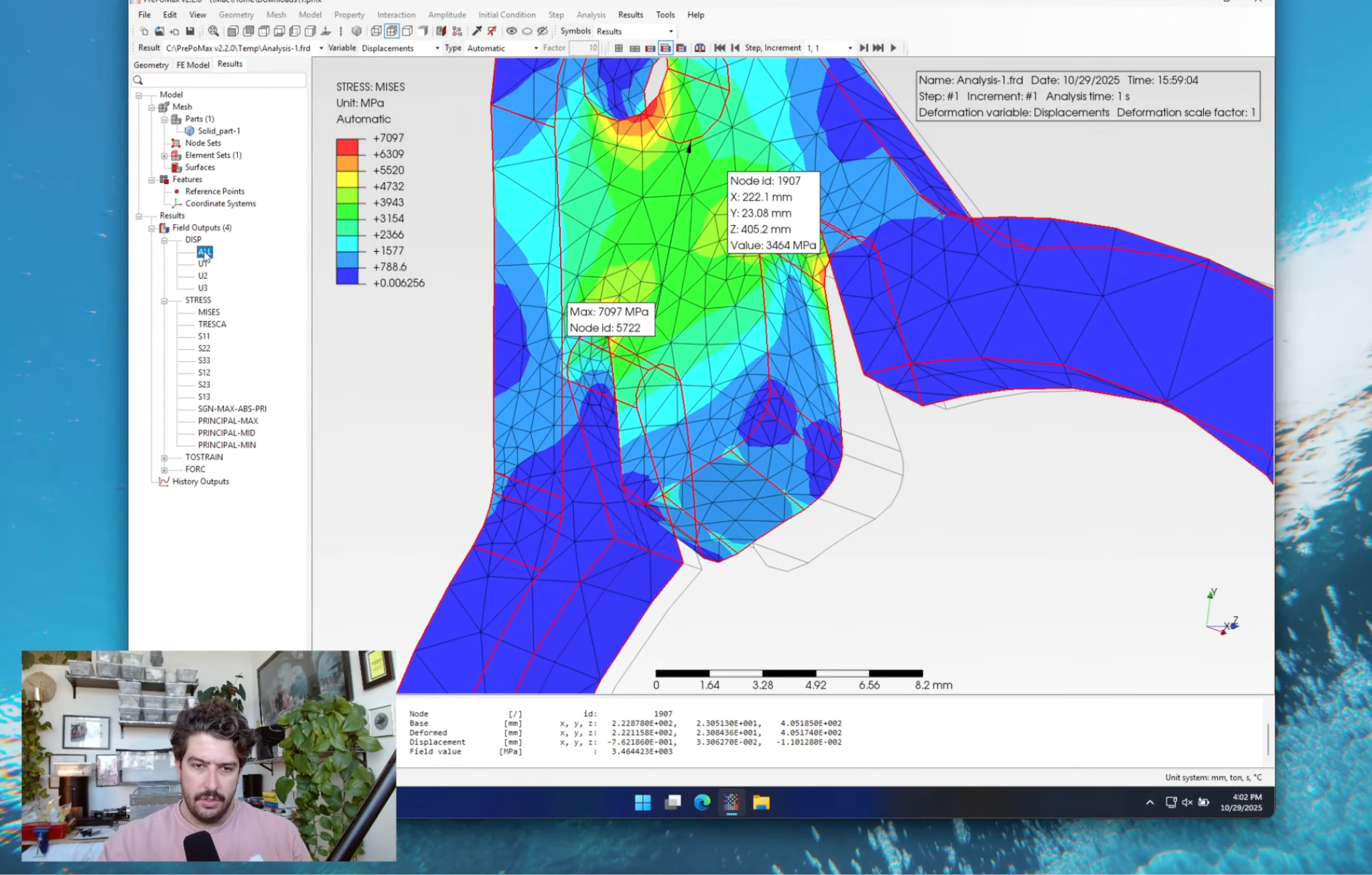
Emanuel Moshouris (also known as em0sh) has a playlist of real-time engineering and CAD problem solving tutorials, such as (re)designing for manufacturability and how to apply tolerance stack analysis in service of supplier-defined constraints. Rather than watching a tutorial to figure out how to solve a specific problem, watching a seasoned engineer in flow often reveals broader, more useful techniques built up over years of solving specific problems. The examples covered are complex enough to span a huge variety of design and engineering reasoning - while also being simple enough to understand as a whole system.
Someone (in this case, David F. McClinton) once wrote down the unwritten rules of systems engineering. If you read Akin’s Laws of Spacecraft Design in the last issue, several of these rules of thumb will sound familiar. At the very least, knowing a couple of these will make it far easier to explain engineering decisions to your team or boss. It also happens to be the 8th law of systems engineering: Never be above plagiarism. Specifically, reuse documentation instead of making it from scratch. Some good lessons to remember: 1) A thing not worth doing is not worth doing well. 2) Any analysis will be believed by no one but the analyst who conducted it. Any test will be believed by every one but the person who conducted it. 3) Never confuse change with progress. 4) If it is not written down, it never happened.
And one fun link to round out the week: Who is in space?
Sponsored: Last chance to join Revel’s Hops + Hypercars this Thursday at Common Space Brewery for LA Tech Week. Get a rare look at Czinger’s 21C VMax and all-new 21C Spyder, and connect with the LA hard tech community over hypercars, beer, and BBQ. RSVP here.
Presented by Quilter: What if AI Could Lay Out Your Entire Board?
Quilter is enterprise-grade, physics-driven AI that automates printed circuit board layout. Engineers upload a schematic and board outline, and Quilter handles component placement and routing end to end, turning weeks of manual work into hours while keeping engineers in full control.
Unlike legacy autorouters or LLM-based tools, Quilter reasons from the physics of the board to produce complete layouts in your native ECAD format, applying physics checks as each candidate is built. Manual PCB layout can take weeks and often runs longer than planned, setting the pace for everything downstream. Teams that want to move faster choose Quilter.

Startup News
Solcoa raised $75M to build its first commercial rare earth metal plant. The company has developed a new chemistry that converts rare earth oxides into high-purity metals. The plant, Solcoa One in Nevada, is slated to start operating in July 2027 with 500 tonnes of annual capacity. Bain Capital Ventures led the $45M equity portion, with J.P. Morgan anchoring $30M in debt and equipment financing.
Oxide raised a $445M Series D at a reported $6B valuation to buy components and add manufacturing capacity against its order backlog. The company builds rack-scale servers that bundle hardware and open-source software, so on-premises compute runs like a cloud. Oxide’s operations already generate taxable income, but it pays for parts well before systems reach customers. The round was led by Eclipse, with AMD and Atreides Management joining as new investors.
Rune raised a $40M Series A to build RELIC, a modular data center that sits at solar farms and runs on power that would otherwise be curtailed. Each unit holds GPU servers, liquid cooling, and custom power electronics, and runs directly on DC from the panels. Rune currently operates about 1 MW across sites in Texas and California. The round was led by Spark Capital.
American Supercritical raised an $8M pre-seed to build supercritical CO2 power units for data centers. The units attach to existing simple-cycle gas turbines and turn their hot exhaust into additional electricity, essentially miniature combined-cycle plants. The company plans to start with a 10 MW unit and says it can raise turbine efficiency by up to 50% without adding emissions or water use. The round was led by Silent Ventures.
Open Jobs
Describe your ideal role on our job board, and we’ll find matches. If you’re hiring, promote your open role here.
Early Career:
Solcoa is looking for a Mechanical Engineering Intern & Metallurgical Engineering Intern in Alameda, CA
Rainmaker is looking for a Rainmaker Fellow, Atmospheric Science in El Segundo, CA
Mid-Level:
Atomic Machines is looking for a Manufacturing Engineer in Emeryville, CA ($150–180K)
American Supercritical is looking for a Turbomachinery Test Engineer in Denver, CO
Vulcan Elements is looking for an R&D Materials & Process Engineer in Research Triangle Park, NC
Senior to Staff:
Exowatt is looking for a Lead Thermal Design Engineer in Austin, TX ($180–215K)
SPAN is looking for a Manufacturing Manager, XFRA in South SF, CA
Tools From Our Sponsors
Design & Simulation
Duro — AI-native PLM that centralizes part data, manages change orders, and connects the whole stack so your team can focus on execution, not administration.
Onshape for Startups – Free access to Onshape Professional or Onshape Government (compliant with ITAR/EAR) for hardware startups and entrepreneurs.
Manufacturing
Loombotic – Instant-quote custom wire harnesses. Upload drawings or design online, fast turnaround.
Xometry — Instant quoting on custom parts, from R&D prototypes to high-volume production runs.
Fictiv – On-demand custom manufacturing from prototype to production.
Access Every Link We’ve Ever Shared 🎞️
Refer three friends to Hardware FYI and unlock our full archive.
Missed an issue? Hunting for that one link? Every tool, guide, and article we’ve ever shared is in here.
P.S. If you find something interesting—an article, tool, funding round, project, really anything—send it our way.
P.P.S. 20,000+ engineers, founders, and operators read this newsletter. If you want to reach them, get in touch.