Let’s Talk Navier–Stokes
Topics worth your time: the Navier-Stokes controversy, Boeing on CFD’s contributions to the 787, Counterpoint Research’s foldable smartphone market projections, an open-weight model trained on investment casting simulations, and wearable biosensors.
P.S. We’re hard at work on our SF Tech Week event on 10/09 - apply to attend!

Interesting Presentation: Contributions of CFD to the Boeing 787
The recent attention around Navier-Stokes, and the resulting debate over human ingenuity and credit of work, is a good excuse to look at the engineering discipline built on top of the fundamental equations: computational fluid dynamics, or CFD.
At the risk of oversimplifying a remarkably complex field, CFD turns equations describing fluid flow into a finite set of calculations a computer can solve. Navier-Stokes equations describe how fluids move under the effects of pressure, viscosity, and other forces; neglect viscosity (a fluid’s internal friction) and you arrive at the simpler Euler equations.
In practice, that could mean simulating airflow through an electronics enclosure, or modeling exhaust recirculation in a data center - both relevant when evaluating a design or layout. (See here for respective Siemens whitepapers on enclosure design and datacenter modeling.)
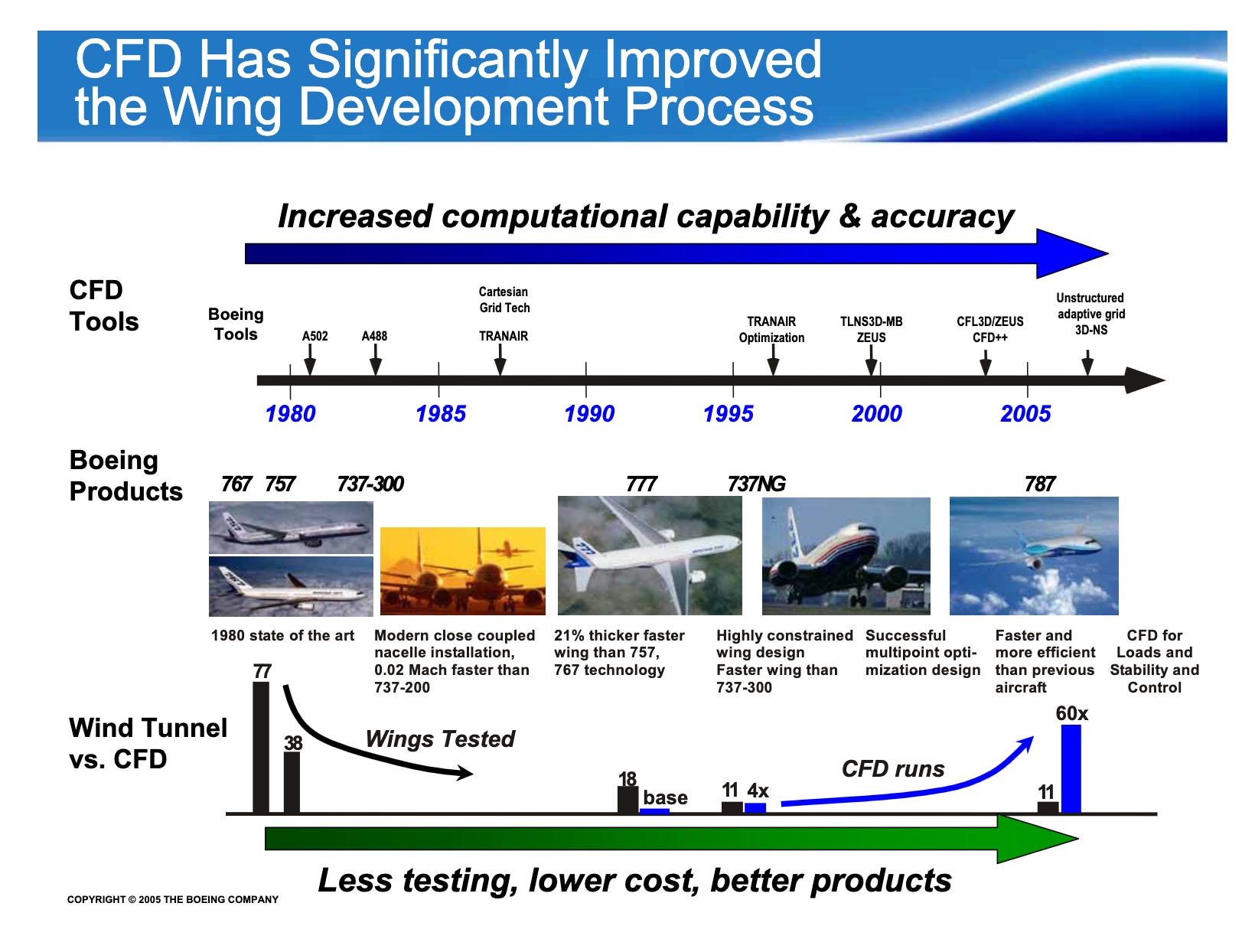
Contributions of CFD to the 787 - and Future Needs is a 2008 presentation on how Boeing used CFD to reduce the possible design space for wing designs in developing the massively popular 787. As simulation fidelity improved, Boeing used CFD to work through designs at both the wing and full-aircraft level, with wind tunnel results feeding back into the same complementary design process.
Given this week’s announcement on the Millennium Prize problem and the finding that fluid equations can ‘blow up’, it’s worth explaining why this does not invalidate decades of fluid simulation analysis. The Navier-Stokes Millennium Prize problem asks whether initially smooth fluid motion in 3D always stays smooth or can develop a “singularity,” where speeds grow without bound in finite time.
CFD, by contrast, does not depend on proving that every possible flow stays smooth forever: engineers solve the equations numerically, on finite grids, over finite time spans, and check predictions against physical measurements.
Terence Tao has thoughtful observations on the growing implications of AI for mathematics.
In most cases in pure mathematics, the problems are posed not because we desperately want the solution to these problems in and of themselves, but because we have seen from past experience that human-directed efforts to solve these problems tend to spur further development of the field through the efforts to solve such problems, and then to digest any partial or complete solutions that emerge for further insights. Prematurely solving the problem by purely AI-powered methods - particularly without full transparency into the solution process - can contaminate this process to the point where it actually becomes a net negative for the progress of mathematics as a whole.
Interesting Chart: Foldable Smartphone Market
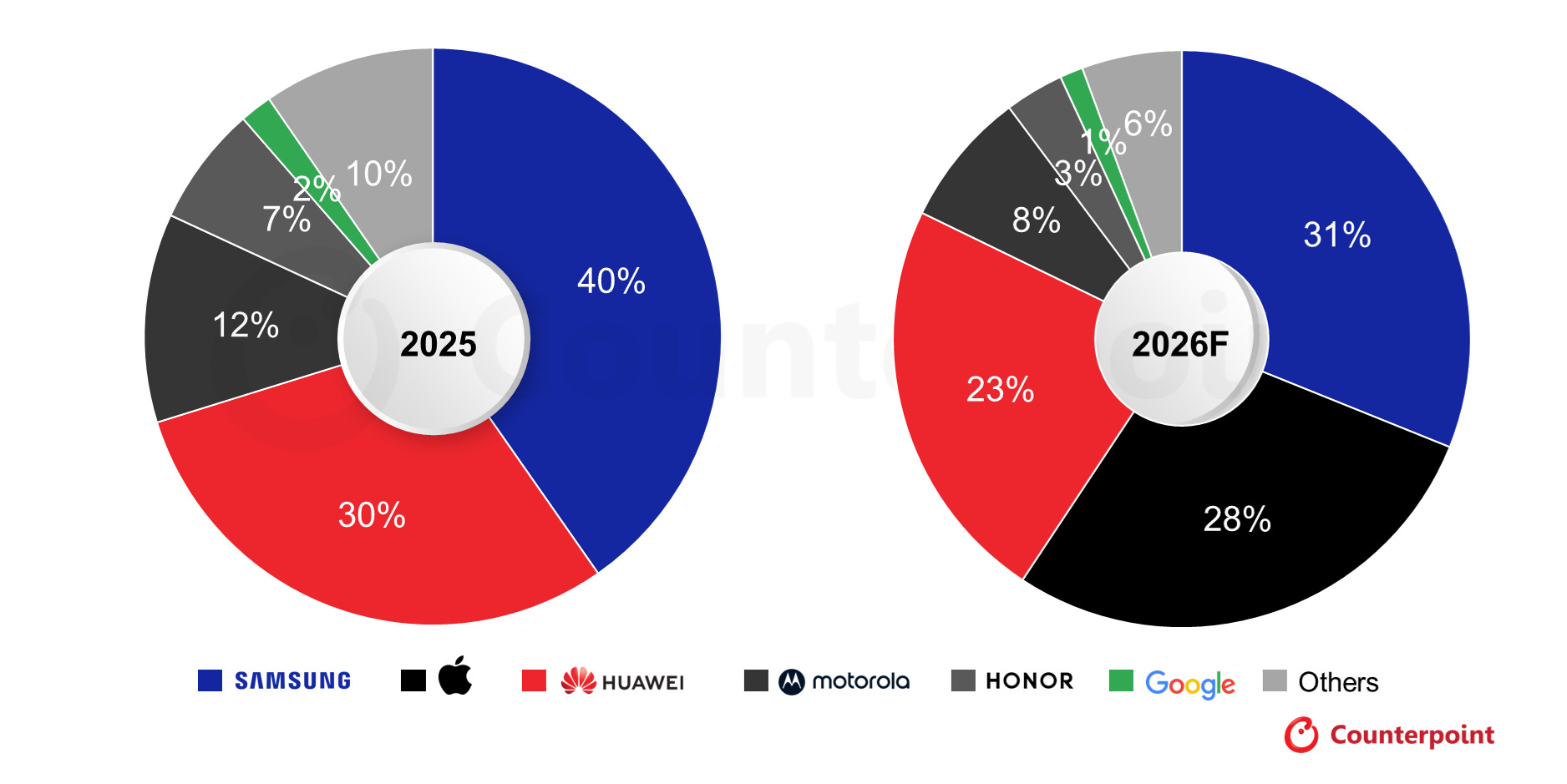
Counterpoint Research’s projections for the foldable smartphone market. Apple is reportedly paying $250 per display to Samsung Display (SDC), a legally separate subsidiary that is 84.8% owned by Samsung Electronics.
Presented by Xometry: How Do You Reverse Engineer a Missing Part?
What happens when a critical component needs to be replaced, but the original CAD model, drawing, or supplier no longer exists? It’s a problem Xometry engineers take on for aerospace and defense customers with aging or hard-to-source parts. The work starts with the physical evidence: examining the original component, capturing geometry with 3D scanning and CMM inspection, identifying materials and finishes, and rebuilding the design intent in a new CAD model and print.
See how expert engineers at Xometry approach reverse engineering when the physical part is the best—or only—source of truth.

More From Around the Web
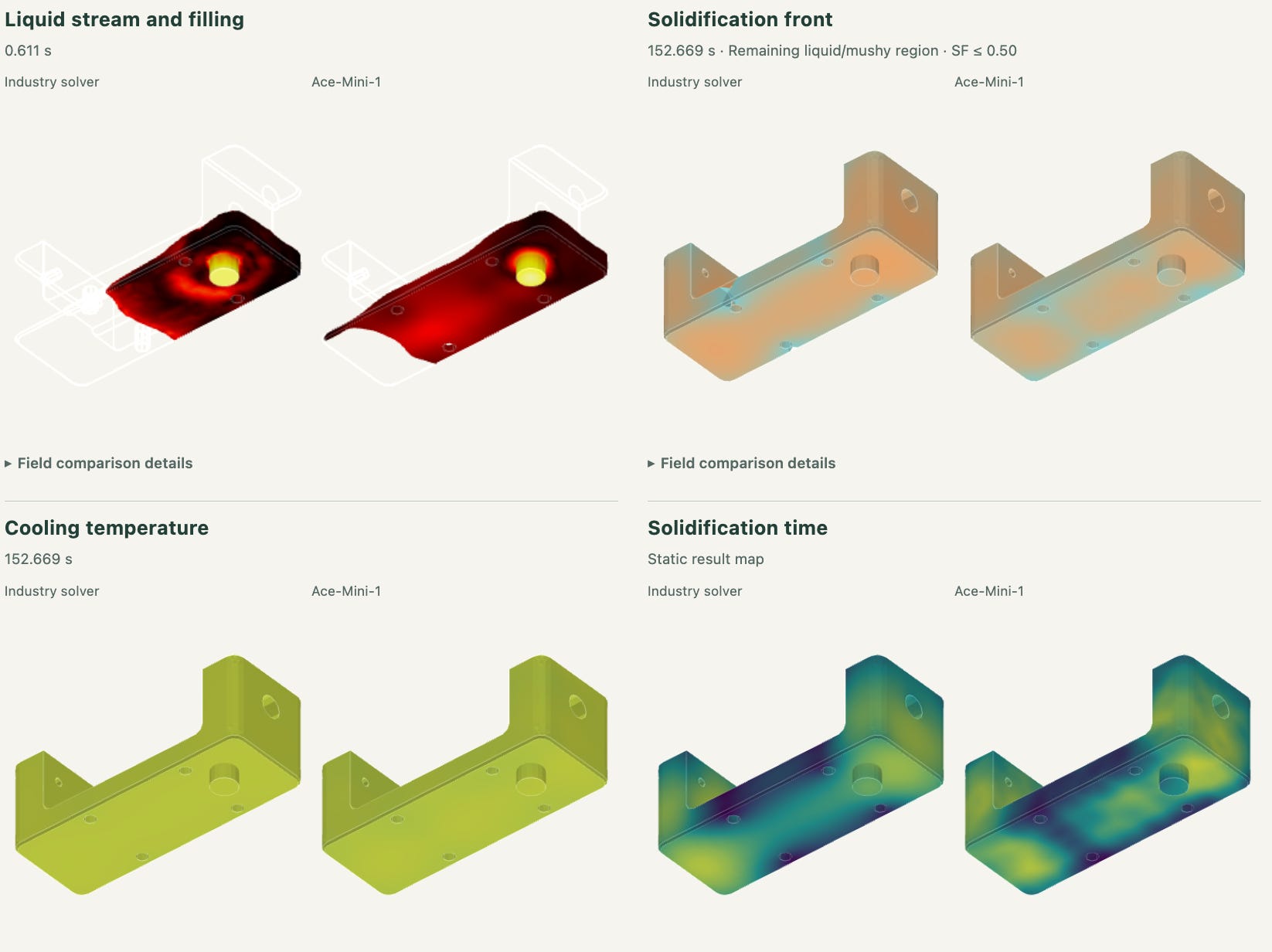
An open-weight model trained on investment casting simulations for 17-4PH stainless steel. Predicts mold filling, solidification, shrinkage, and other process outcomes typical of standard industry solvers.
A good weekend listen from The Amp Hour with Andy Kong on wearable biosensors, low-power electronics, and solar harvesting.
OT cybersecurity principles for the factory floor. Ransomware demands against manufacturers averaged $1.16 million in 2025, more than double the previous year (Industrial Cyber).
Manufacturing & Startup News
CloudNC raised a $20M Series B extension for its AI CAM Assist software that automates CNC programming. Nimble Ventures led the round.
A look at Agility Robotics’ finances ahead of its proposed $2.5B SPAC deal. The $300M+ in committed orders comes from one customer, with milestones attached.
Covenant emerged from stealth with over $250M raised across three rounds to build Anthem, a long-range, heavy payload strike missile designed for mass production.
The Exploration Company raised a $450M Series C to build Nyx, a reusable capsule that carries cargo to orbit and back, and Storm, a rocket engine for a future reusable heavy-lift launcher.
Tools From Our Partners
Aris Machina Protos – Design & validate anything, with the AI-native workspace for industrial science and hardware R&D.
SolidWorks for Startups – Full access to SolidWorks’ product development tools, free for early-stage startups.
Zoo – AI-native CAD with a modern geometry engine, readable code, and editable feature trees for precise, editable models.
Access Every Link We’ve Ever Shared 🎞️
Refer three friends to Hardware FYI and unlock our full archive.
Missed an issue? Hunting for that one link? Every tool, guide, and article we’ve ever shared is in here.
P.S. If you find something interesting—an article, tool, funding round, project, really anything—send it our way!
P.P.S. 20,000+ engineers, founders, and operators read this newsletter. If you want to reach them, get in touch.